By Emily R. · Updated 2026-08-12 · 12 min read
Most people who sign up for a new streaming service make the decision in under ten minutes. A channel count, a low price, and a few screenshots — that's enough for thousands of buyers every month. A week later, the stream buffers during the live match, the app disappears from the TV menu, and the seller's contact goes silent.
This scenario repeats across IPTV communities more often than sellers admit. The root cause is rarely the technology — it's the absence of basic verification before payment. This tvpassorg buyers guide walks you through the practical checks that separate a reliable subscription from a costly regret: trial policy, connection limits, renewal pricing, server stability, and support responsiveness.
Why most IPTV buyers regret their choice
Not everyone regrets choosing an IPTV service. But the ones who do describe a very similar sequence of events. The first two days feel great: fast channel zapping, impressive picture quality, and a price that looks like a cable-killer. Then the weekend arrives — live sports start freezing, because the server is overloaded by exactly the kind of prime-time traffic you're generating right now.
The second source of regret is hidden limitations. That "22,000 channels" number includes dead links, duplicate feeds, and low-bitrate copies that look terrible on a 55-inch screen. Buyers realize too late that they purchased a playlist, not a polished product.
Third, most regretful buyers skipped the trial. Paying for a full year to save a few dollars per month is a gamble, not a smart saving. When the service shuts down — and gray-market providers do vanish — there is rarely a chargeback path left.
What criteria should drive your decision
Leave the total channel count aside for a moment. These seven factors will tell you more about a provider than any marketing screenshot.
- Live stream stability. A channel that buffers every few minutes is unwatchable regardless of how many channels the playlist claims. Ask for a test during evening peak hours and watch a live event, not a VOD.
- Device compatibility. The service should run natively on your Fire TV Stick, Android TV, smartphone, or whatever you plan to use. If the seller can't explain the setup for your device, they probably don't care about the experience after payment.
- EPG quality. An accurate electronic program guide with show names, local timezone support, and correct channel mapping matters more than most first-time buyers assume. Without it, you'll spend hours hunting for what to watch.
- Connection limits. One subscription shared across six devices sounds great until every stream freezes. Confirm how many concurrent connections your plan includes before you commit.
- Server redundancy. Providers with multiple server paths handle peak hours without dropping the biggest events. Ask what happens when the main route fails.
- Support responsiveness. Send one question to the seller before subscribing. If the reply takes three days, imagine your frustration when a channel dies during a soccer final.
- Trial policy. A provider confident in their product gives a 24-hour trial without being asked twice. Refusal is a signal — treat it accordingly.
What you need to know about the current market
The market for services like tvpassorg is broad, fragmented, and full of resellers. Understanding how the chain works will help you spot weak links early.
Most sellers are resellers. They buy a master subscription, split it into smaller plans, and sell them under their own brand. That model is not automatically bad — good resellers add installation support, local language help, and extended trials. But quality depends on the upstream provider, not the person in the chat window.
Pricing in this category generally sits between €8 and €15 per month. Significantly lower prices usually indicate oversold servers or channel lists with no real backbone. Considerably higher prices should come with premium infrastructure, a polished app, and responsive support to justify the premium.
Also understand the legal context. Services that stream channels without proper rights are operating in a gray area, and consumer protections barely exist. Pay with a method that offers a dispute option, or accept the risk that comes with unregulated sellers.
Questions to ask before buying
Use these questions as your pre-purchase checklist. The answers separate informed buyers from people who rely on luck.
- Can I test the service for 24 hours during evening peak time? Run the test at 8 PM, not at noon.
- What is the exact number of simultaneous connections allowed on this plan?
- Which IPTV player do you recommend for my device and why? A seller who clearly explains TiviMate or IBO Player setup knows their service.
- Is the EPG included and does it adjust to my timezone?
- What is the renewal price after the first billing period? Ask to see the current price list.
- Do you publish a status channel for server issues? Where?
- If a main TV channel goes down, what is the typical fix timeline?
- If the service doesn't work at all on my device, is there a refund policy?
Warning signs to spot
A few red flags deserve an immediate rejection, even if the price looks unbeatable.
- No trial. There is no legitimate technical reason to refuse a 24-hour trial. "We don't do trials" usually means the service doesn't survive scrutiny.
- APK from random file hosts. If the seller points you to a random website or a private Telegram file nobody has checked, you risk malware on your TV or phone.
- Prices far below market. A few euros per month for "lifetime" access is not a deal; it's a server you'll share with a thousand other buyers.
- Pressure to pay "this week only". Desperation is a predictable tactic, and legitimate sellers don't need it.
- Vague company identity. No name, no status page, no history — those absences mean zero accountability.
- Payment methods without protection. Crypto and unmarked gift cards are common in this segment; losing your money has no recourse afterward.
tvpassorg strengths and limitations at a glance
✓ Benefits & Pros
A single subscription can replace basic cable with sports, news, entertainment, and international content.
Setup on Fire TV Stick and Android devices takes minutes with a straightforward APK and login code.
Monthly billing makes it possible to walk away after one cycle if performance doesn't match expectations.
Detailed EPG and catch-up features on many channels — a practical bonus for people who travel between timezones.
✗ Limitations & Cons
Stream quality during peak hours depends on the provider's server load; an evening trial is essential.
Support often runs through chat only, and response times vary on weekends.
Some channels in the playlist are lower-bitrate versions that won't satisfy a large 4K TV screen.
Promotional prices may not survive renewal — always confirm the standard rate before paying.
RECOMMENDED RESOURCE
tvpassorg
Evaluate tvpassorg plans against your checklist — trial access, connection limits, and renewal terms are all worth verifying before you commit.
Explore tvpassorg Plans →
Comparison table of available options
Here is the side-by-side picture for someone choosing between a service like tvpassorg, a budget reseller, and an established premium provider. Treat these as relative observations — actual plans vary by reseller and region.
Any provider that refuses to answer the questions above should be treated as a budget reseller regardless of their branding. And remember: a cheap initial month never compensates for a buffer-filled live final.
Compare tvpassorg subscription options side by side — pricing, supported devices, and plan details in one place.
Find Out More About tvpassorg →Which option fits your budget and needs
If you want flexible month-to-month service, broad live sports coverage, and easy setup on your Fire TV Stick or Android device, a service in the tvpassorg category is worth a trial. The key condition: the trial must pass your own evening stress test.
If your budget is tight, start with a cheaper reseller but never prepay beyond one month. Expect basic EPG, occasional buffering during primetime, and slower support — that's the trade-off you accept.
If IPTV will be your household's primary TV source, a premium established provider is the wiser choice. A higher monthly cost buys stability, polished apps, and support that picks up the phone. In this case, "cheap" is the most expensive option.
Families should prioritize multi-connection plans. Expat households should verify local channels and the EPG timezone. Sports fans should test the exact channels they watch during a live match.
How to get the most out of your IPTV subscription
Once you subscribe, a few small choices decide how much value you actually get from the service.
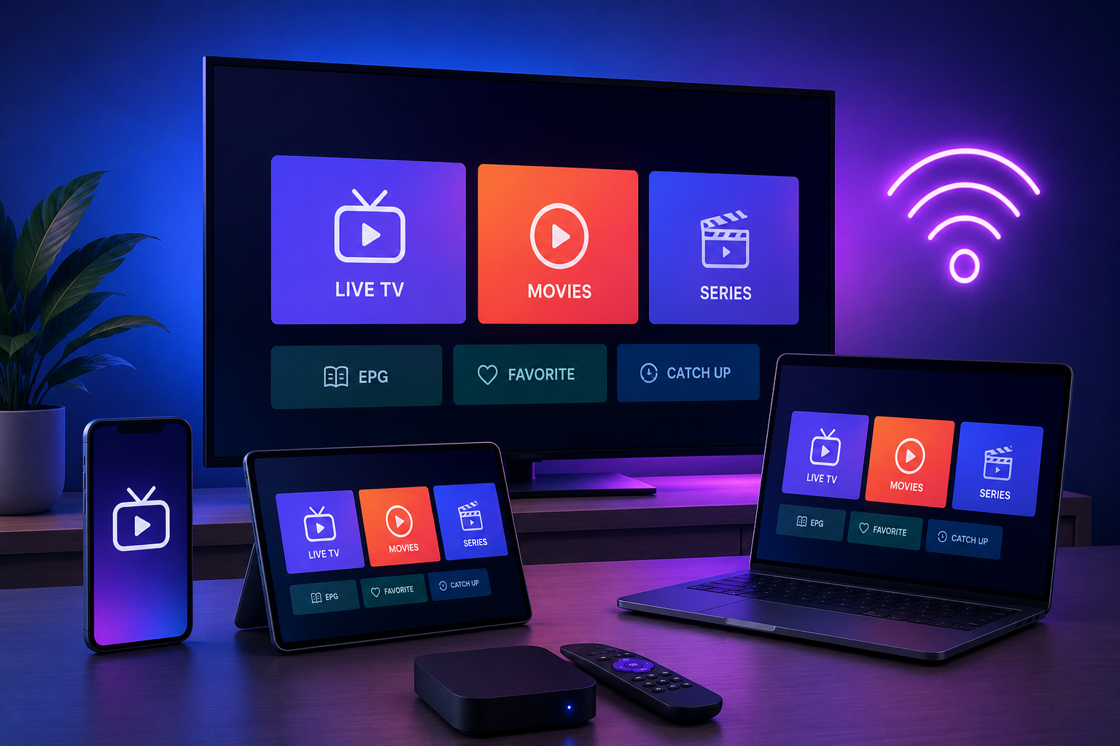
- Install a serious player. TiviMate, IBO Player, or Smarters will give you better favorites, catch-up, and EPG layout than a default panel. A few dollars for the paid version is the best upgrade you can make.
- Retest during peak hours in the first week. If the stream holds on a Saturday evening, you've found a reliable provider.
- Connect the box via Ethernet or 5 GHz Wi-Fi. Most "provider is bad" complaints actually come from weak home Wi-Fi.
- Route streaming through a VPN if your ISP throttles large data transfers. A nearby server with low ping usually stabilizes the connection.
- Pay monthly until you're confident. After two successful months, switch to a multi-month plan to reduce the effective rate.
- Keep records. Screenshot the plan details, renewal price, and support contact at signup. Providers change or disappear — your proof doesn't.
You can make tvpassorg — or any comparable IPTV service — work well if you verify the basics first. Trial, device support, connection limits, and peak-hour stability matter far more than channel count. Test first, pay monthly, document everything, and you'll skip the mistakes that drive most buyers to a regretful Reddit search.
Featured Streaming Selection:
Learn more about tvpassorg →Affiliate Disclosure: Clicking this secure link supports our team through standard partnership terms at zero extra cost to your invoice.
Frequently Asked Questions
This article contains affiliate links. Our editorial analysis remains independent.