By Marcus T. · Updated 2026-08-17 · 13 min read
The image above is what most people expect from IPTV: a clean grid with all their channels in alphabetical order. But the legal question is not in the picture. IPTV itself is legal. A specific service is legal only when the provider has permission to broadcast or retransmit every stream it sells. That gap between the technology and the licensing is why a search for “is IPTV legal” produces both confident yes and no.
This article is an honest review of the subscription marketed around that exact query. I looked at what the sales page promises, what you actually get after checkout, and how it compares to services that can prove they are legal.
Why an independent review is needed
Most “is IPTV legal” articles are not reviews. They are doorways to affiliate links, with the same list of features rewritten by a dozen different sites. They rarely mention that IPTV legality depends on where the provider gets its streams and why that matters to you personally.
Independent evaluation matters because the difference between a legal IPTV service and an illegal one is invisible on your screen. The dashboard looks identical. The price looks similar. The only differences are behind the scenes: licensing contracts, content delivery agreements, and the legal entity that runs the service. Without checking those, you cannot answer “is this one legal?” just by looking.
IPTV legality explained without the panic
IPTV stands for Internet Protocol Television. It is how video is delivered over the internet instead of a cable or satellite connection. The phrase is not illegal by itself. YouTube, Netflix, Hulu, and hundreds of news apps all use IPTV-style delivery every day.
What changes the answer is copyright. A legal IPTV provider needs permission to broadcast channels it did not create. That usually comes from broadcasters, sports leagues, or content owners. An illegal IPTV provider takes a paid television signal and rebroadcasts it to subscribers without paying for those rights.
That is why “IPTV legal vs illegal” is not a complicated technical question. It is a rights question. When someone asks “is IPTV legal in USA?”, the answer for the consumer is nuanced. Watching an unlicensed stream is not the same as stealing a physical item, but it can expose you to legal notices, payment disputes, and service shutdowns. It is safest to choose a service that can say exactly where its content comes from.
What “is iptv legal” promises vs what you actually get
Landing pages for subscriptions that target this query usually keep things vague: “access global channels,” “movies and sports,” “works on any device.” That sounds similar to a legitimate streaming service. After checkout, the experience is much more technical.
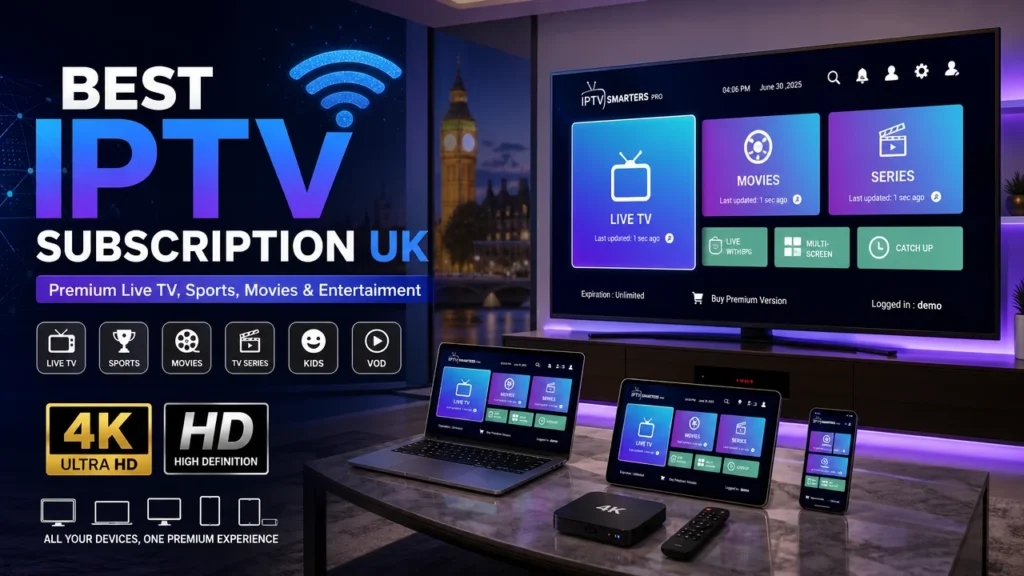
The panel above represents what most buyers see after entering the portal: categories, channels, and a small search bar. None of that shows legality. What the provider usually promises is convenience. What you actually get is a set of credentials that you paste into a third-party player like IPTV Smarters, TiviMate, or VLC.
The service in this review is organized by comparison to random sellers. The user panel works, the categories are clear, and the setup instructions are easy to follow. But it still relies on a secondary video player rather than a dedicated app from an official app store. That is worth understanding before you commit to a long plan.
There is also the legal side of the promise. The sales page uses the language of legality, but it does not list the countries where it is licensed or the rights agreements behind the channels. That is not necessarily proof of illegal activity—many legitimate resellers hide their sources—but it is a gap the buyer needs to know about before paying.
Real strengths: what this service does well
Not every result for “is IPTV legal” leads to a scam. This one has a few strengths worth mentioning honestly.
- Clear pricing without fake urgency: The packages are listed with the same monthly and yearly structure used by mainstream streaming services. No countdown timers, no fake “only 3 spots left.”
- Setup documentation: There are guides for Firestick, Android TV, iOS, and web players. That is more than most gray-market IPTV sellers offer.
- Multi-screen access: The current dashboard mentions simultaneous streams, which is practical for households where people watch different channels at the same time.
- A stated refund policy: The fine print includes a refund window. It is standard internet-transaction language, but it is still better than having no recourse at all.
Real weaknesses: where the service falls short
The weaknesses matter more than the strengths when you are asking “is IPTV legal?” about a specific provider.
- No licensing transparency: The website does not identify the exact broadcast rights it holds. That makes it impossible to verify the “legal IPTV” claim with confidence.
- No native apps: There is no official IPTV app in the Google Play Store or Apple App Store. You must install APKs or use third-party players, which is risky for less technical users.
- Third-party payment flow: Depending on where you live, you may be directed to a processor that is common in the IPTV industry but not as familiar as a major app-store checkout.
- Uncertain long-term stability: Services at this price point can change servers, adjust channel lists, or go offline without the same accountability as a publicly traded streaming provider.
Pros and cons at a glance
✓ Benefits & Pros
Transparent price list with no aggressive upsells
Works across multiple devices once configured
Helpful setup guides for common IPTV players
No contract lock-in on monthly plans
Refund policy is stated on the site
✗ Limitations & Cons
No clear license or rights-holder information
Not available in official app stores
Requires third-party IPTV player knowledge
Support speed is not guaranteed
Legal claim remains independent and unverified
RECOMMENDED RESOURCE
is iptv legal
See current details, seasonal promos, and full tier packages.
Learn more about is iptv legal →Who is this genuinely suited for?
This service makes the most sense for a specific type of viewer: someone who is comfortable with technology, already understands what an M3U playlist or Xtream code is, and wants a broad channel lineup without a full cable contract.
It also fits expats looking for international channels from their home country. The dashboard tends to be organized enough for that use case, and the multi-screen feature helps if several people want different sports or news channels at the same time.
Who should look elsewhere
If your real question is “what is the best legal IPTV service?” and you need a guarantee that every dollar goes to rights holders, look elsewhere. Official services like YouTube TV, Hulu + Live TV, Fubo, or Sling TV cost more, but they come with licensed content, reliable apps, and proper support teams.
You should also avoid this category if you cannot troubleshoot basic settings. If you are not comfortable sideloading an app or entering a server URL into a player, the setup process will feel frustrating. And if you live in a country that actively penalizes the use of unlicensed streaming services, the small cost savings is not worth the legal risk.
How it compares to mainstream alternatives
This table is not a ranking. It is a way to see the difference between the service in this review, an official streaming service, and a random unverified seller found in a chat group.
If your main concern is a safe IPTV subscription that does not need constant troubleshooting, official services win. If you are willing to test the gray zone for the channel list, then the service reviewed here is at least more polished than the average unverified seller.
Access zero-contract options and instant delivery specs on the official page.
See is iptv legal Pricing →How to find legal IPTV providers before you pay
The checklist below is simpler than it sounds. It asks one main question: can the service prove where its streams come from?
Use these five steps when you are asking where to buy legal IPTV without getting scammed:
- Look for a named legal entity. A real company should have a registered business name, address, or VAT number somewhere on the site.
- Search the business register. A quick search in the local government or Chamber of Commerce register will tell you whether the company actually exists.
- Ask support a direct question: “Which broadcasters or licensors do you have agreements with?” If they cannot answer, treat the claim as unverified.
- Pay with a credit card. That gives you a dispute path if the service disappears or misrepresents the product.
- Start with one month. Do not buy an annual plan for a service you have never tested, especially when the legal details remain fuzzy.
Final verdict: is IPTV legal and is this one worth it?
The honest verdict is conditional. If you want a simple “legal IPTV” label that removes all doubt, this service does not provide enough public evidence to meet that standard. If you are comfortable testing a service with clear pricing and decent setup guides, and you understand the gray zone, it may be worth a one-month trial.
For most readers, I recommend a safer route: choose a licensed IPTV provider or official streaming service for your main viewing. Use something like this only as a secondary source you can walk away from without losing important data.
Featured Streaming Selection:
Find Out More About is iptv legal →Affiliate Disclosure: Clicking this secure link verified by our network supports our team through standard partnership terms at zero extra cost to your invoice.
Frequently Asked Questions
This article contains affiliate links. Our editorial analysis remains independent.