By Analyst Team · Updated 2026-08-12 · 12 min read
iptv services: What You Need to Know Before Subscribing
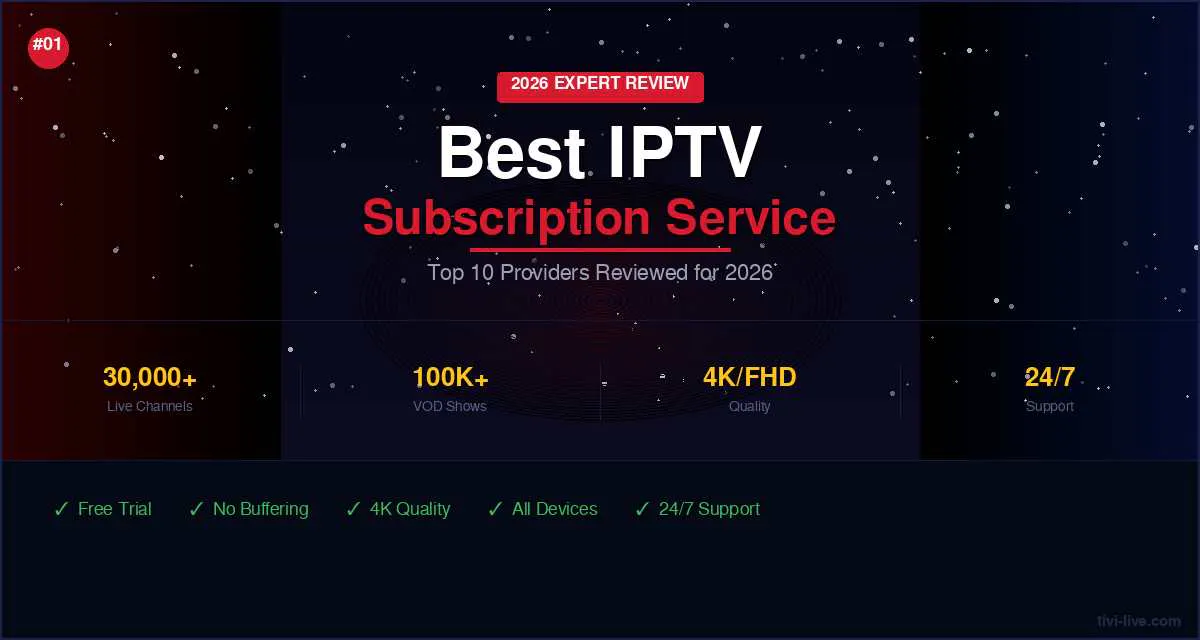
Most households are tired of paying cable prices for channel bundles they rarely watch. IPTV services change the deal by sending television over your internet connection — live TV, sports, movies, and on-demand content at a fraction of the monthly cost. The first image above shows the kind of interface you get with a modern provider: a full channel grid, a VOD library, and an electronic program guide in one clean screen.
The IPTV market is crowded, however, and provider quality varies wildly. Some services deliver crisp 4K streams with accurate EPG data. Others buffer at the worst moments, disappear overnight, or run on overloaded servers. This guide answers the questions that actually matter: what IPTV services really are, how they work behind the scenes, their genuine benefits and limits, who they suit best, and how to sign up without wasting money. By the end, you'll know exactly what to look for in 2026 — and how to find a provider that truly streams without constant buffering.
What Is IPTV services Exactly?
IPTV stands for Internet Protocol Television. Traditional cable pushes a broadcast signal through a coaxial cable, and satellite delivers it from orbit. IPTV services take a different route — they break television channels into small digital packets and transport them over a standard broadband connection, just like any other internet data.
There are three core types of IPTV services:
- Live television — real-time channels that follow the same broadcast schedule you get on cable.
- Video on demand (VOD) — films, series, and documentaries you can start whenever you want.
- Time-shifted TV — catch-up access for programs broadcast in the past few days, so you never miss an episode.
Most commercial iptv services in 2026 rely on M3U playlists or the Xtream Codes API. An M3U playlist is a simple text file containing channel URLs; Xtream Codes is a web-based system that manages users, channels, and schedule data. Both work with free player apps like TiviMate, IPTV Smarters, IProTV, and VLC. The delivery method matters far less than the infrastructure behind it — the best provider keeps redundant servers and a smooth content delivery network.
How IPTV Services Work Step by Step
Understanding the mechanics helps you diagnose buffering and choose a stronger provider. Here's what happens when you hit play:
- The original TV signal arrives at the provider's data center.
- It is encoded into a digital format such as MPEG-4 or HEVC.
- The encoded file is segmented into small data packets.
- Packets travel over a content delivery network (CDN) toward your device.
- Your player app receives the packets and reassembles them in real time.
- The app decodes the video and displays it on your screen.
Internet speed matters, but raw bandwidth isn't the only factor. Latency, server load, CDN quality, and your distance from the nearest node all affect how smooth the stream feels. A reliable IPTV service keeps spare capacity for weekend sports, prime-time evenings, and sudden demand spikes.
Looking for a provider that actually delivers? Check the independently tested list of iptv services on iptvstreampulse before you buy.
Browse Tested iptv services →LIMITED TIME AVAILABILITY
Unlock Full iptv services Access
Unlock complete high-definition channel information and priority access packs. Lock in current pricing today before plans return to standard regional rates.
Concrete Benefits for Users
Why do millions of households switch from cable and satellite every year? The practical advantages go well beyond price:
✓ Pros of IPTV services
- Typical cost of $10–$25/month versus $60+ for cable
- 1,000+ channels including sports, news, kids, and movie channels
- Strong international coverage with region-specific bundles
- Works on Smart TV, Android, iOS, Fire Stick, PC, and more
- Built-in VOD libraries and catch-up TV included
- Month-to-month flexibility with no annual contracts
✗ Cons of IPTV services
- Some providers operate in a legal gray zone
- Stream quality depends heavily on your internet connection
- Providers can disappear without notice
- Customer support quality is inconsistent
- EPG data is not always perfectly accurate
- You may need a VPN if your ISP throttles streaming
For most viewers, the pros clearly outweigh the cons — but only when you choose a well-run provider. The image below shows a real-world example of a premium IPTV sports package in action.
Honest Limitations You Must Accept
Let's look closer at the cons, because the IPTV industry has a reputation problem for a reason. A responsible buyer should go in with open eyes.
- Legal gray areas. Many IPTV resellers don't hold official distribution rights for the channels they sell. You can protect yourself by choosing a service with transparent licensing information and by learning about your country's regulations around streaming.
- Buffering and downtime. The all-you-can-watch model puts heavy load on servers. A weak provider will struggle during peak hours, major sports finals, and popular premieres — exactly when you need the stream most.
- Provider disappearance. The IPTV market changes fast. Services can shut down or rebrand overnight. Always avoid paying for more than a few months in advance, no matter how tempting the discount is.
- Limited customer support. You'll rarely get a 24/7 phone line. The best providers offer email, ticket, or Telegram support with fast response times; the worst offer only a WhatsApp contact that goes silent.
- Dependence on internet quality. If your broadband drops or your Wi-Fi is weak, your TV goes down with it. IPTV simply cannot work well on an unstable connection.
Comparison: IPTV services vs Cable vs Satellite vs Legal Streaming
To see clearly where IPTV services fit in the market, compare them side by side with the alternatives you already know. This table uses realistic 2026 pricing and typical service characteristics:
| Feature | IPTV services | Cable TV | Satellite TV | Legal Streaming |
|---|---|---|---|---|
| Monthly cost | $10–$25 | $60–$120 | $70–$150 | $8–$80 |
| Channels available | 1,000+ typical | 200–500 | 300–600 | 50–200 live |
| International options | Excellent | Poor | Moderate | Limited |
| Contract required | Month-to-month | 1–2 years often | 12–24 months | No lock-in |
| Device flexibility | Very high | Low | Moderate | High |
| Video quality | HD, FHD, 4K | Up to 1080p | 4K options | Up to 4K |
| Buffering risk | Moderate | Low | Low | Low |
| Legal risk | Gray area | None | None | None |
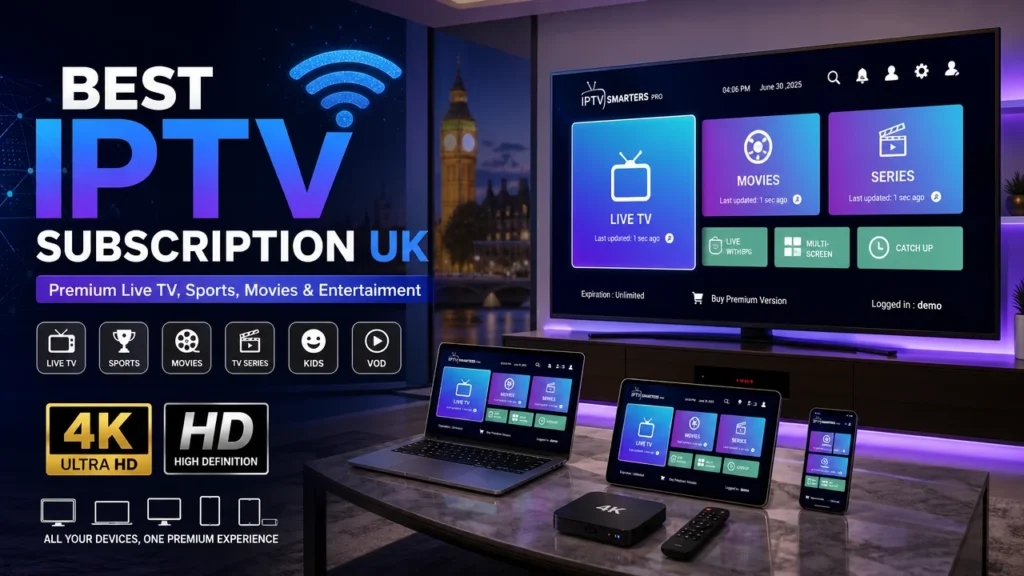
The bottom line: IPTV services win on price, channel count, and flexibility, but they demand more homework from the buyer. The image below illustrates the typical IPTV experience — a polished sports interface that manages to combine live games, stats, and channel navigation in one place.
Ready to compare real providers with verified uptime and channel counts? The current rankings make the research effortless.
See the 2026 iptv services leaderboard →Secure special promotional rates instantly before the window closes.
Activate Your iptv services Subscription Now →Who Are IPTV services Best For?
IPTV services aren't for everyone — but they're a perfect fit for several common viewer profiles:
- Cord-cutters leaving cable. If you want to drop a $100+ cable bill without losing live news, regional sports, or appointment TV, IPTV is the most straightforward replacement.
- Sports enthusiasts chasing global fixtures. The best iptv services for sports carry packages that include European football, American leagues, cricket, boxing, and racing — often on multiple regional feeds at once.
- Families on a budget. Affordable iptv services for families start around $12–$15 per month and include kids' channels, movie channels, and a VOD library that replaces two or three separate streaming subscriptions.
- Expats and international audiences. IPTV services for international channels deliver home-country news, soaps, and live sports that regular cable simply doesn't offer.
- Rural households with good broadband. In areas where cable infrastructure isn't available but fiber or 5G internet is, IPTV becomes the only way to get a large channel lineup without a satellite dish.
How to Get Started with IPTV services: 10 Practical Steps
Once you've decided that IPTV is the right fit, follow these steps to start watching without headaches:
- Check your internet. Run a speed test and confirm at least 25 Mbps for HD or 50 Mbps for 4K streams. Stability and low jitter matter more than peak download numbers.
- Pick a viewing device. The most common options are an Amazon Fire Stick, an Android TV box, a smart TV, or simply an iPad/phone with a screen-mirroring option.
- Install a player app. TiviMate, IPTV Smarters, IProTV, and VLC are free, reliable, and cover almost every device.
- Shortlist providers. Read independent iptv services review 2026 articles, community threads, and YouTube demonstrations. Make a list of three candidates.
- Use free trials first. A legitimate provider offers a 24-hour or 7-day trial. Test it during peak evening hours, not just at lunchtime.
- Subscribe month-to-month. Even in 2026, the smartest purchase is a single month. Annual plans sound cheaper but become a loss if the provider disappears.
- Enter your credentials. In your player app, add the M3U URL or Xtream Codes login details that the provider sends by email.
- Configure the EPG. Load the electronic program guide data so you can see what's airing now and next. This turns a raw channel list into something that feels like cable.
- Tweak the buffer size. In your player's settings, try buffers of 5–10 seconds. That small adjustment can stop momentary drops from interrupting a live match.
- Enable a VPN if needed. Some internet providers throttle streaming traffic. A VPN masks the traffic type and often produces a smoother stream.
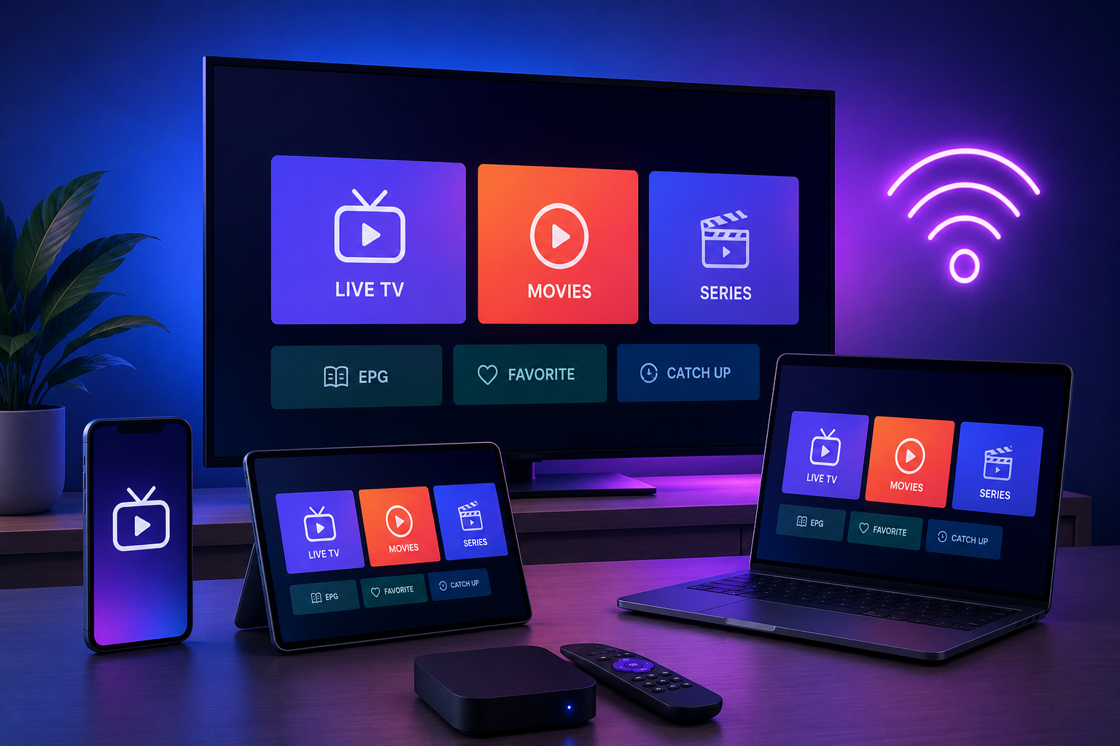
The diagram below shows the complete IPTV workflow from provider's server to your living room screen — the same process you just configured on your device.
Final Verdict: Are IPTV services Worth It in 2026?
For the right viewer, IPTV services are the best value in television today. You get a massive channel lineup, international coverage, VOD, and multi-device freedom for roughly a fifth of what cable charges. The tradeoff is that you must do a little homework before subscribing — reading independent reviews, testing free trials, and picking a provider with solid infrastructure rather than the cheapest price.
The safest path is to start with a provider that has been independently verified for uptime, channel quality, and customer support. The team at iptvstreampulse regularly tests the leading iptv services and publishes transparent rankings, so you don't have to gamble your first month on a random seller. Compare, run a trial, and then decide with confidence — that's the complete, honest way to join the IPTV revolution.
Final Subscription Window:
Choose Your Plan Today →Affiliate Disclosure: Clicking this secure link verified by our network supports our team through standard partnership terms at zero extra cost to your invoice.
Frequently Asked Questions
What are the best iptv services for sports in 2026?
The best IPTV services for sports are the ones with dedicated sports bundles, multiple regional feeds, and strong server capacity for live events. Look for providers that carry platforms like ESPN, Sky Sports, Bein Sports, DAZN, and local sports networks in your region. The most reliable way to judge them is to read recent independent iptv services review 2026 discussions, join community forums, and try a 24-hour trial before committing. A provider that buffers during big games is useless no matter how cheap it is. The landscape shifts fast, so always check fresh recommendations before subscribing.
How can I find reliable iptv services that don't buffer?
Reliability starts with infrastructure, not promises. Choose a provider that uses a well-distributed CDN, offers enough server capacity, and publishes uptime statistics. Test the service during peak hours — Friday evening and Sunday afternoon sports — before you pay for a long subscription. Fast internet at your end also matters; stability is more important than raw speed. Community feedback from Discord, Reddit, or IPTV forums is often more honest than reviews on the provider's own website. Finally, keep a VPN ready, because some ISPs throttle IPTV traffic during heavy usage.
Are there iptv services with local channels and regional networks?
Yes, many iptv services include local channels and regional networks alongside international content. These might be ABC, NBC, CBS, Fox affiliates, regional sports networks, and local news stations — though availability depends on the provider's rights and geographic zones. If hyper-local coverage is a priority, ask the provider directly before purchasing and search reviews for your specific city or region. Some providers offer separate local channel packages at a slightly higher price. A free trial is the easiest way to confirm which local feeds actually come through.
Where can I safely buy iptv services without being scammed?
You should buy iptv services only from providers with a track record, transparent pricing, and responsive support. Avoid sellers operating only through encrypted messaging chat groups with no public history. Independently researched directories like iptvstreampulse are a solid starting point because they verify uptime, channel counts, and customer satisfaction. Never use gift cards or irreversible crypto payments for a first month — prefer payment methods that offer buyer protection. Read the terms carefully so you know what happens if the service changes channels or goes down.
What are affordable iptv services for families that still include VOD?
Affordable family iptv services typically cost between $10 and $20 per month and include kids' channels, movie channels, catch-up TV, and a solid VOD library alongside live family entertainment. The best approach is to look for multi-screen packages so one subscription covers the main TV, tablets, and phones. Providers that let you pause or cancel monthly are better suited to family budgets than rigid annual contracts. Many top-reviewed providers also offer parental PIN locks and separate profiles for children. Check the latest family-focused reviews to see which plans hold up in everyday household use.
How do I read an iptv services review 2026 without being misled?
Start by checking the publication date — IPTV providers disappear and reappear under new names constantly, so reviews older than six months may be irrelevant. Look for posts that mention specific tests: stream stability at peak times, EPG accuracy, device compatibility, and customer support response times. Be skeptical of reviews that use aggressive affiliate language; they often lack real testing depth. Genuine reviews usually mention minor drawbacks instead of claiming everything is perfect. Finally, cross-check what you read on two or three independent sources before spending money.
Can any provider truly guarantee iptv services no buffering?
No provider can honestly guarantee zero buffering under every condition, because buffering also depends on your internet speed, Wi-Fi quality, and ISP throttling. What a good provider can do is keep buffering extremely rare by using strong infrastructure — multi-CDN, redundant servers, and high-capacity uplinks. Look for providers that publish their server locations and accept real-time status checks. On your side, use a wired Ethernet connection when possible, place your device close to the router, and test during peak times. If a provider promises "no buffering ever," that's a red flag, not a safety net.
Which iptv services for international channels cover my home country?
The best iptv services for international channels group content by origin region — for example, South Asian, Latin American, Middle Eastern, or European — so you can toggle between packages easily. Providers that license live news, local entertainment, and home-country sports tend to be far more stable than those that simply relay free streams. Check expat community forums; they often name the providers with genuinely solid coverage for each specific country. Use free trials to verify that channels from your home country load during primetime hours in that time zone. If a provider lists thousands of channels but fewer than 50 are from your region, keep looking.