By Analyst Team · Updated 2026-08-03 · 11 min read
An IPTV box is one of the easiest ways to upgrade your living room entertainment. Instead of juggling a laptop, a smart TV app, and a game console, a dedicated box lets you keep live sports, international channels, and on-demand films in one clean interface. This buyer's guide is here to help you understand which hardware specs, certifications, and subscription terms actually matter in 2026. If you get these things right on the first purchase, you will save hours of troubleshooting — and avoid buying a second replacement device a few months later. The setup pictured above — a compact iptv box beside a modern TV streaming a live sports broadcast at 60fps — is what a correct, finished setup should look like.
Why Many People Regret Their iptv box Choice
The most common regret we see in forums comes down to one sentence: "I bought the cheapest box on a marketplace and now it buffers all evening." The device looked great in photos. It advertised Android, 4K, and 2GB of RAM for under $25. But the Android version was six releases outdated, the Google Play Store was missing, and the Wi-Fi antenna was clearly not dual-band. The result is a box that chokes on any live stream above 720p — especially during evening peak hours when everyone is watching.
Another source of regret is buying a box that is tied to a "lifetime" or "free" IPTV service. When the service disappears, as it usually does, you are left with a locked interface, a dead remote, and no way to install a different app. Even more disappointing is discovering that the supplier has no firmware updates and no reply on the email they gave you. That is why this iptv box guide focuses on the checks that prevent those expensive mistakes.
The good news? Those problems are entirely avoidable once you direct your purchase toward the specifications below. The rest of this article walks you through every criterion you should check before you commit.
Short on time? A dependable iptv box for live sports should have at least 2GB RAM, Android 11 or newer, dual-band Wi-Fi, and an Ethernet port. See the main iptv box deal that checks these boxes →
Criteria That Should Drive Your Decision
Processor and memory
Every modern IPTV box runs on an Android or Linux system. The processor brand matters less than you think — an Amlogic S905X4, an S922X, or an RK3318 are all capable of playing TV smoothly. The bigger factor is RAM. 1GB is no longer enough in 2026. Open your IPTV app, load the electronic program guide, and start switching channels, and 1GB will instantly begin reloading the interface. 2GB is the minimum we recommend. 4GB gives you comfortable headroom for heavy channel guides, recording, and multi-view features during big matches.
Android TV certification vs. generic Android
Certified Android TV devices — the ones carrying Google's official logo — come with the Play Store, Widevine L1 DRM, and regular system updates. Generic Android boxes still run Google Android, but they often skip the Play Store, lack official codecs, and never receive a security update after purchase. When you see an iptv box offer that includes a pre-installed IPTV app, certification becomes even more important: you want the device to remain useful for years, no matter what happens to that one service.
Connectivity and Ethernet
Ethernet is the single most underrated feature in IPTV boxes. Compressed 4K sports streams need a stable 25–50 Mbps connection with consistent latency. Over Wi-Fi, you are fighting the router, neighboring networks, walls, and signal interference. A box with a Gigabit Ethernet port — or even a solid 100Mbps Ethernet connection — will buffer far less and last far longer. For wireless connections, dual-band (2.4GHz + 5GHz) is mandatory. Wi-Fi 6 support is now common on mid-range boxes and genuinely helps in crowded homes.
Video, HDR, and audio
Look for a box that handles 4K60 with HDR10+ and, if possible, Dolby Vision. Many cheap boxes claim 4K but actually output 4K30 without HDR — that is fine for film, but not for fast-moving football. Audio is often forgotten: if you have a soundbar or AV receiver, check for HDMI ARC support and audio passthrough. On the compression side, AV1 decoding is a nice feature because more channels are gradually shifting to AV1 streams for better picture quality at lower data rates.
Remote, ports, and practical extras
Do not overlook the remote control. A voice remote with a built-in microphone and volume buttons that work with your TV will save you more frustration than almost any other accessory. Check that the box supports HDMI-CEC — that way, one remote can control both the box and the TV. Storage also matters: 16GB internal is fine, but having a USB 3.0 port lets you add a flash drive for recorded content and extra apps.
✅ Certified iptv box — pros
- Google Play Store and official DRM licensing
- Regular security and firmware updates
- Ethernet port for stable sports streaming
- 4K60 HDR10+ output for smooth 60fps sports
- Works with any mainstream IPTV subscription
❌ Generic no-name boxes — cons
- Fake specs and "lifetime IPTV" promises
- Outdated Android with no Play Store access
- Poor Wi-Fi antenna and weak power supply
- No official 4K license; HDCP handshake issues
- No warranty or support if the seller disappears
LIMITED TIME AVAILABILITY
Unlock Full iptv box Access
Unlock complete high-definition information and priority access packs. Lock in your pricing model today before plans return to standard regional metrics.
What You Need to Know About the Current Market
The IPTV box market in 2026 is split into two camps. The first camp is certified Android TV devices from known brands and a few smaller companies that pay for Google licensing. The second camp is filled with marketplace listings where every product has "iptv box" in the name and a rendered promotional image promising everything. Learning to tell those two apart is the single most useful skill you can develop before buying.
You also have the streaming-stick competition to consider. The Amazon Fire Stick is ubiquitous and good at basic streaming, but many users find its interface restrictive for IPTV apps — especially when they want a custom launcher, an open app locker, or a hardwired network connection. This is exactly why the Android TV box continues to survive and even thrive: it gives you flexibility, ports, and better thermal performance for long viewing sessions.
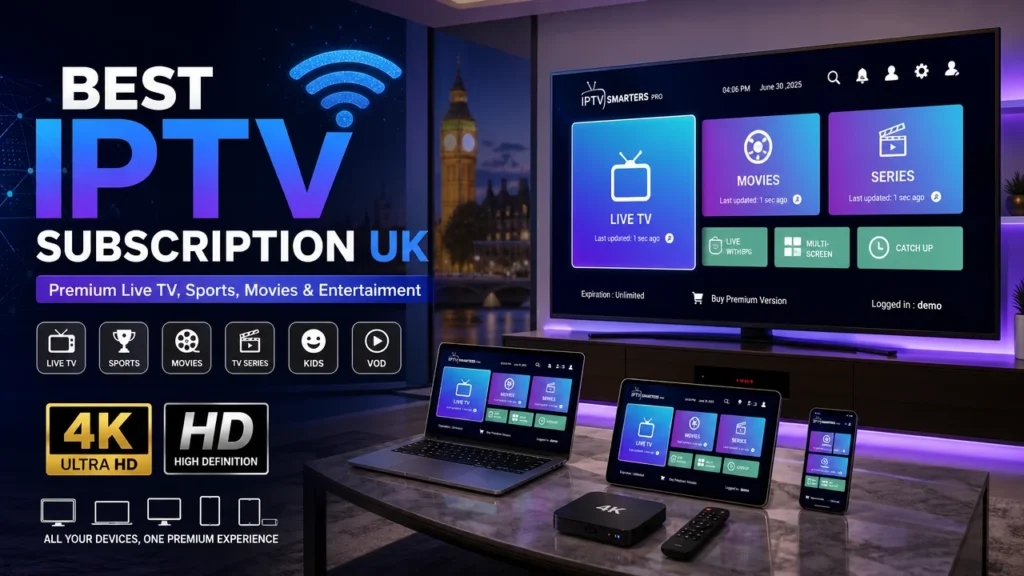
Pricing in 2026 has settled into predictable tiers. Entry boxes with 2GB RAM, Android 11, dual-band Wi-Fi, and Ethernet cost between $40 and $65. Premium boxes reach $150 and up. The margin is used for better power supplies, better cooling, genuine support, and software updates. As you can see in the channel-guide interface below, the user-facing experience — the EPG grid, sports categories, recording options — often depends more on the subscription and the app than on the hardware itself.
Questions to Ask Before Buying
Ask these eight questions before you enter any payment details. They take five minutes to verify and can save you from a box that becomes e-waste in six months.
- Which Android version is actually inside the box? Android 11 or newer is the safe baseline in 2026.
- Is the device Google certified? Look for "Android TV" certification, not just "Android powered."
- Can it handle 4K live sports at 60fps? Check the HDMI version and HDR support in the specifications.
- Does it have an Ethernet port and 5GHz Wi-Fi? If the listing does not mention Ethernet, assume it does not have it.
- Can you cancel the subscription monthly? A no-contract iptv box subscription keeps your options open.
- What happens if the service provider disappears? Reputable sellers give you a backup path or a refund window.
- Does the plan support multiple connections? Useful if you want the same subscription on more than one TV.
- What is the warranty and return policy? If there is no company address, there is no warranty.
Secure special promotional rates instantly before the window closes.
Activate Your iptv box Subscription Now →Secure special promotional rates instantly before the window closes.
Activate Your iptv box Subscription Now →Warning Signs to Spot Before You Pay
Knowing what to look for is half the battle. These are the red flags we encounter most often in buyer reviews and complaints:
- "Free lifetime IPTV" promises. No legitimate service gives you lifetime channels for a one-time payment. It is almost always pirate reseller behavior, and it will die without support.
- Ludicrous 8K scaling claims on a $25 box. The hardware cannot even sustain 4K60, so 8K is a fantasy. Check the HDMI port version; HDMI 2.0 is the real minimum for 4K HDR.
- Brand names that look like typos. Lookalike spellings of well-known brands are a way to fool quick shoppers.
- No physical address, support email, or return policy. A legitimate business can always tell you where it is located.
- No firmware or Android version listed. If the spec sheet avoids the details, the product is likely hiding something.
Comparison Table: Available iptv box Options
Here is how the main types of boxes compare in 2026. Use this table as a quick sanity check before you tap "buy."
| Option | Best For | RAM / Storage | Connectivity | Video | Verdict |
|---|---|---|---|---|---|
| Certified Android TV iptv box | Live sports, IPTV apps, plug-and-play | 2/16 or 4/32 GB | Dual-band Wi-Fi + Gigabit Ethernet | 4K60 HDR10+ | ✅ Best all-round |
| Budget HDMI stick | Travel, second TV, casual viewing | 1/8 or 2/16 GB | Usually 2.4GHz Wi-Fi only | 1080p; 4K on some newer models | ⚠️ Good but limited |
| Generic no-name box | Tinkerers who accept risk | Varies, often 1/8 GB | 2.4GHz with weak antenna | Claimed 4K, often misleading | ❌ Avoid |
| High-end media streamer | Home cinema, multi-profile households | 3/16 or 4/32 GB | Wi-Fi 6 + Ethernet | Full 4K HDR suite, Dolby Atmos | 💎 Premium choice |
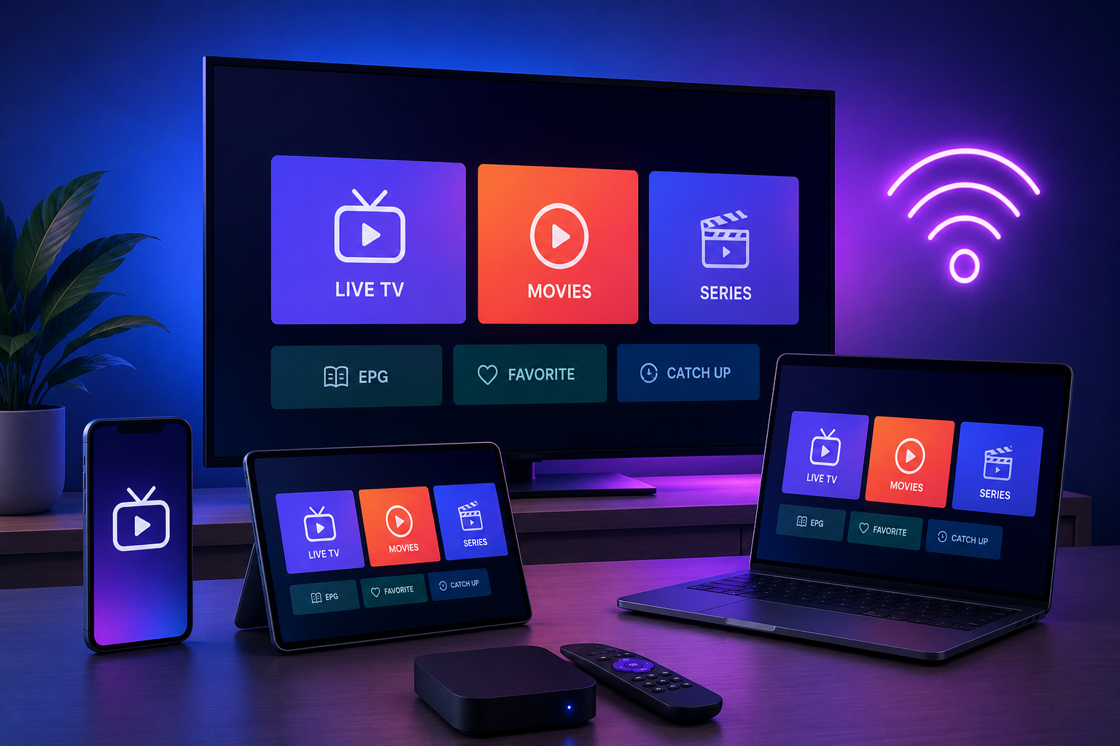
Take a close look at the ports on the device before buying. The rear panel photo below shows what a properly equipped connection panel should look like: HDMI 2.0 or 2.1, Ethernet, USB, and power are all separate, so you can connect a stable network and external storage simultaneously without using an adapter.
Recommendation by Budget and Needs
Under $50 — The Savvy Shopper
Stick to a certified Android TV box with 2GB RAM, 16GB storage, and dual-band Wi-Fi. You will not get premium extras, but you will get reliable playback and the official Play Store for all your IPTV apps. Brands that openly list their chipset and Android version are safer than silent listings.
$50 to $90 — The Sweet Spot
This is where the best value-for-money iptv box packages sit. Look for 4GB RAM, 32GB storage, Wi-Fi 6, and a pre-configured IPTV app that works out of the box. If live sports is your main use case, this is the range to choose. The main offer recommended in this guide fits exactly here: a certified box bundled with a no-contract subscription, tested for 4K60 sports streams.
$150 and Above — Home Cinema Fans
Only spend this much if you need Dolby Vision, full audio passthrough, or heavy multi-tasking across several apps. For most viewers, the extra cost is unnecessary. The same IPTV subscription will look nearly identical on a well-chosen $65 box.
Multiple TVs in the same home
If you want iptv boxes for multiple TVs, check whether the subscription plan supports two or more simultaneous connections. Many providers now offer multi-screen plans for couples or family living rooms. You can then buy one good box per TV without paying twice for the service.
How to Maximize Your Investment
Once your iptv box arrives, a few setup habits will keep it running fast for the long term:
- Use Ethernet whenever possible. A cable beats Wi-Fi for live sports, always.
- Reboot your box weekly. A 30-second restart clears memory leaks and keeps the guide responsive.
- Force the correct resolution. If you mostly watch 1080p, set the box to 1080p to avoid unnecessary upscaling.
- Update apps regularly. IPTV apps improve their player engine over time; do not let yours fall behind.
- Keep the box ventilated. Heat is the number one killer of cheap electronics. Do not bury it inside a closed cabinet.
- Use a surge protector. Sudden power loss can corrupt Android partitions and re-trigger setup.
- Choose a subscription with a trial period. Test server performance during peak evening hours before committing to a longer plan.
Final Subscription Window:
Main Offer Today →Affiliate Disclosure: Clicking this secure link verified by our network supports our team through standard partnership terms at zero extra cost to your invoice.
Frequently Asked Questions
What is the best iptv box for live sports?
The best iptv box for live sports has at least 2GB RAM, dual-band Wi-Fi or — ideally — a wired Ethernet connection, and 4K60 HDR output. Certification matters too, because sports apps from providers like DAZN, Fubo, and Sky require the official Google Play Store to install cleanly. A certified Android TV box pre-configured with an IPTV app gives you the lowest friction for channel zapping and match-day stability.
How do I set up an iptv box?
Set up an iptv box the same way you set up any Android device: plug in HDMI and power, connect to Wi-Fi or Ethernet, sign in with a Google account, and install your IPTV app. If your provider gives you a custom APK, enable apps from unknown sources in the settings, then enter the portal URL and credentials from your subscription. Reboot once and you are ready to browse channels.
Which is better: an iptv box or a Firestick?
It depends on how you watch. A Firestick is locked into Amazon's interface, supports fewer launchers, and sometimes blocks sideloaded apps. An iptv box offers unrestricted app installation, an open system, and usually faster Ethernet and better cooling. If your main use is IPTV apps and live sports, a proper box still beats a stick — although recent Firesticks are perfectly capable for basic streaming.
Where can I buy an iptv box without getting scammed?
Buy from a seller that clearly discloses the chipset, Android version, RAM, storage, and certification. Look for a physical address, a real customer service email, and a warranty period. If a website only shows low-quality renders and says "lifetime IPTV," walk away. The safest route is to pick a provider that bundles hardware with a trial subscription so you can test performance before paying more.
Can I get an iptv box subscription without a contract?
Yes, many modern IPTV providers offer month-to-month plans without a contract. A no-contract iptv box subscription is ideal because you can switch providers if the server quality drops. Always confirm whether the plan supports multiple concurrent connections and whether the price stays the same after the first billing cycle.
Are 4K iptv box reviews really that different from 1080p?
A true 4K iptv box delivers a noticeably sharper and smoother picture on a 4K screen, especially for live sports and UHD documentaries. But the quality also depends on your subscription package — you need a provider that actually offers 4K channels. Check the box's 4K60 output and HDR support before paying. If you have a 1080p TV, save the money and get a quality 1080p box instead.
Can I use an iptv box for multiple TVs?
Yes, if your provider allows multi-connection. You will need one box per TV, but many providers offer a two-screen plan that costs less than two separate subscriptions. Check whether the plan states the maximum number of simultaneous streams, then buy a second cheap certified box for the other room.
Is a cheap iptv box with wifi any good?
A cheap iptv box with wifi can be surprisingly good if it has 2GB RAM, dual-band Wi-Fi, and a recent Android version. The problem is that many cheap units cut corners on the Wi-Fi antenna, power supply, and DRM certification. A smart compromise is a sub-$50 certified box with Ethernet — then use a powerline adapter if the box is far from your router.